Headless means content is maintained in one place and displayed on every channel in that channel's own layout. For marketing and management, this changes how quickly content goes online and how much effort a new channel takes.
In the meeting with IT and the agency, someone says the word headless, and the head of marketing jots it in the margin of her notepad. A week later, management wants to know what it means for their own work.
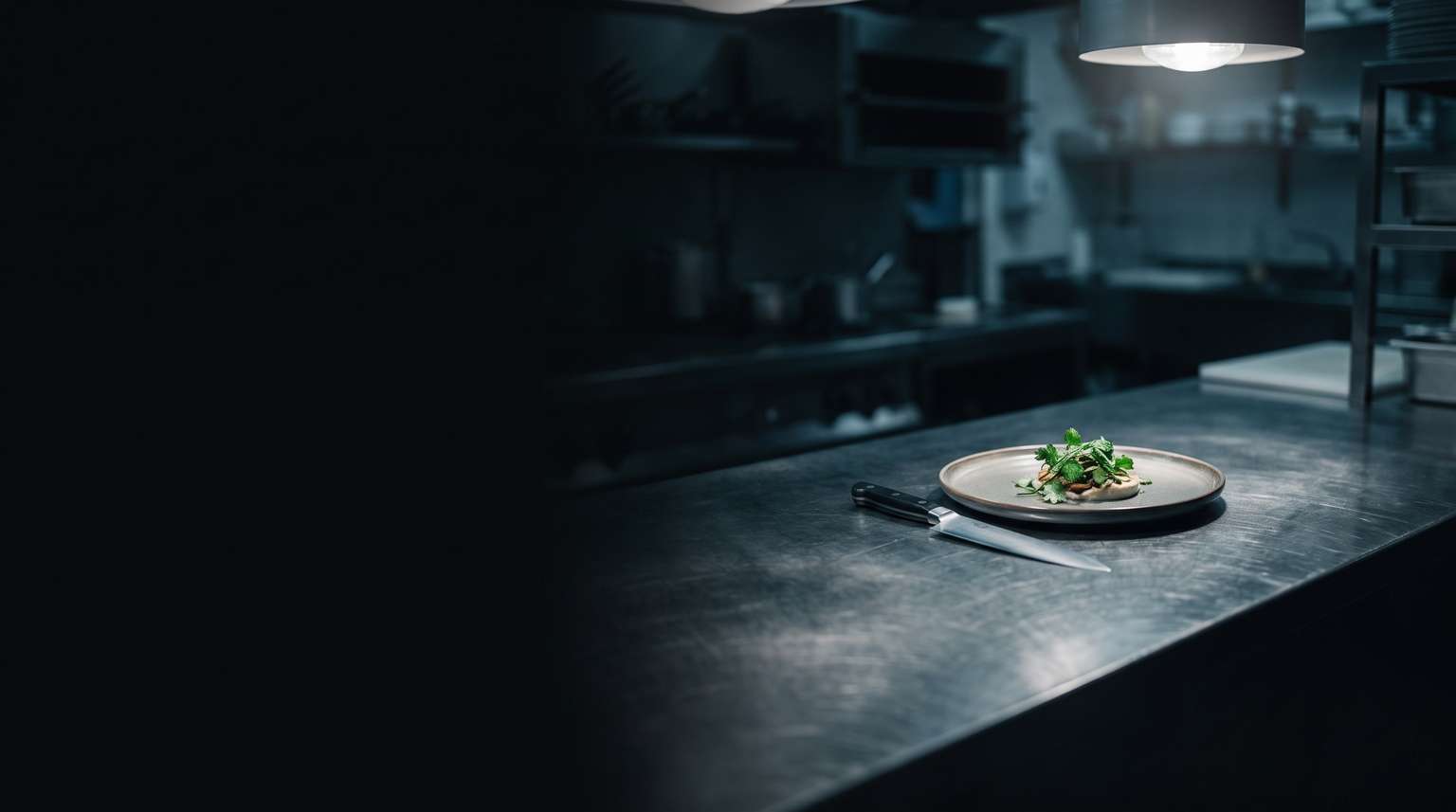
The explanation works without any technology if you picture a restaurant.
Most important facts
- //Headless trennt den Ort, an dem Inhalte gepflegt werden, von den Kanälen, auf denen sie erscheinen.
- //Der Kopf ist die Darstellung auf Website, Portal oder Display, der Körper ist die Inhaltsverwaltung dahinter.
- //Im visuellen Editor von Storyblok sieht die Redaktion ihre Änderungen im echten Layout, bevor sie online gehen.
- //Das Marketing setzt Inhalte selbst um, die IT kümmert sich um Technik, Sicherheit und Schnittstellen.
- //Für eine kleine Website ohne weitere Kanäle ist Headless meist nicht nötig.
// 1
Kitchen and dining room
Why the kitchen does not need to know where the food is served
Food is cooked in the kitchen and served in the dining room, on the terrace or by the delivery service, and each of these routes presents the dish differently. The kitchen cooks to a fixed recipe. How the plate reaches the guest is up to the service.
A headless CMS works on the same principle. The CMS is the kitchen: that is where the editorial team prepares content in one place, from product texts to data sheets. The website, customer portal, app or trade fair display handle the service. Each channel fetches the content and serves it in its own form.
With a classic CMS, kitchen and dining room are built in together, and there is exactly one table. Anyone who wants to open a terrace or start a delivery service has to build a second kitchen. In a company, that means a second editorial system as soon as a portal or dealer area is added to the website.
Headless literally means without a head, and the image fits better than you might think. The head is what visitors see, meaning the website layout or the interface of a customer portal. Specialists call it the frontend. The body is the system behind it, where content is maintained, translated and approved.
With a headless CMS, no head is permanently attached to the body. It provides the content through an interface, a so-called API, and each frontend sends a request there and receives the right content. For a new channel, development simply connects another head to the same body. No new editorial system is needed.
Three steps from draft to display
How content gets from maintenance to every channel

1. Maintain
The editorial team creates the content once in the CMS, in fixed fields for text, images, data sheet and language versions.

2. Provide
After approval, the CMS provides the content through an interface where every channel can fetch it.

3. Deliver
Website, portal and display show the content in their own layout. A correction in the CMS appears in all connected channels once published.
// 2
The visual editor
The trade fair landing page that no longer waits for a ticket
In many companies, every bigger change to the website goes through a ticket with IT or the agency. Then even the landing page for the next trade fair or a changed data sheet sits in the queue. With a headless CMS and a well-built set of building blocks, marketing handles such tasks itself.
There was a fair objection to early headless systems. Editors filled in forms and could not see what the result would look like. Storyblok has a visual editor for this, where the editorial team sees the real page. They click on a text block, change it and immediately see the change in the layout before it is published.
Editors insert and move building blocks such as image galleries, quotes or contact forms with a click. Which blocks exist and what they look like is defined once by the development team. After that, marketing combines them itself and creates new pages without programming, while the design stays consistent.
In this split, IT takes care of technology, security and interfaces instead of text corrections. Both sides work more independently and get in each other's way less often.
A new channel gets its own table, but not a second kitchen.
You notice the separation again at the next relaunch. If the website gets a new design, development mainly swaps the head. The content stays in the system and does not have to move; at most, individual building blocks are adapted to the new design.
// 3
Not for everyone
When a simple system is perfectly fine
Headless is not a must. If you run a small website with few pages, plan no further channels and rarely change content, a simple system will serve you well.
It is different once several channels, languages and editorial teams are involved, especially if the same content appears in several places or is updated regularly. That applies to many industrial companies selling a broad product portfolio in several countries.
Werbeberg has delivered headless projects as a Storyblok Certified Partner since 2017. You sign the Storyblok licence directly with Storyblok; we help with selection and setup and take care of concept, frontend, interfaces and support. In the initial meeting, we will also tell you if a simpler solution fits better.
// 4
To forward
The short version for your colleagues
For the email to management and the marketing team:
Headless means we maintain content in one place, and each channel shows it in its own layout.
A new channel such as a portal or a trade fair display does not need a second editorial system.
In Storyblok's visual editor, we see changes in the real layout before they go online.
Marketing implements content itself and waits for IT or the agency less often.
For a small website without further channels, headless would be oversized. With our channels and languages, it is worth a look.
With key sentences for your next meeting (in German)
Whitepaper: explaining headless internally
The whitepaper with the restaurant comparison, head and body, and the three steps from maintenance to channel. Plus six key sentences you can use directly in your own presentation for management or your team.
Headless in practice
DXP with Storyblok
Our solution page shows how Werbeberg combines Storyblok and a custom-built frontend into a DXP for industrial companies.
Free initial meeting
Is headless right for you?
Together we look at which channels you serve today and how your editorial team works. Afterwards you know whether headless is worth it for you or whether a simpler solution will do.
B2B is a walk in the park.
Together we look at which channels you serve today and how your editorial team works. Afterwards you know whether headless is worth it for you or whether a simpler solution will do.
B2B is a walk in the park.